
650nm 5mW Red Laser Diode Module — 5V, 6mm Brass Housing, Focusable, Pre-Wired — 5/10 Pack
650nm 5mW Red Laser Diode Module — 5V, 6mm Brass Housing, Focusable, Pre-Wired — 5/10 Pack
Couldn't load pickup availability
⚠️ LASER SAFETY — READ BEFORE USE
This module emits a visible laser beam (~5mW, Class IIIa/3R). Never point at eyes, faces, animals, aircraft, or vehicles. Direct or reflected laser light can cause eye injury. Always follow proper laser safety precautions.
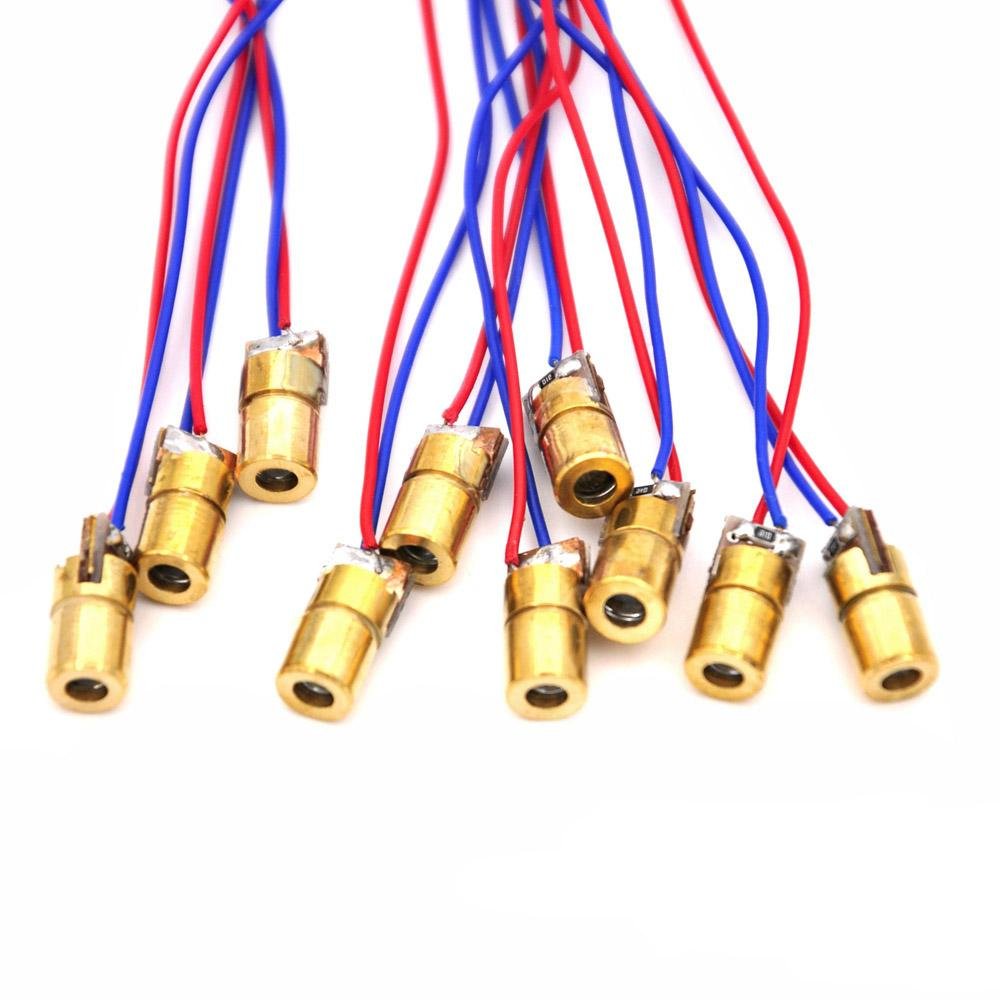
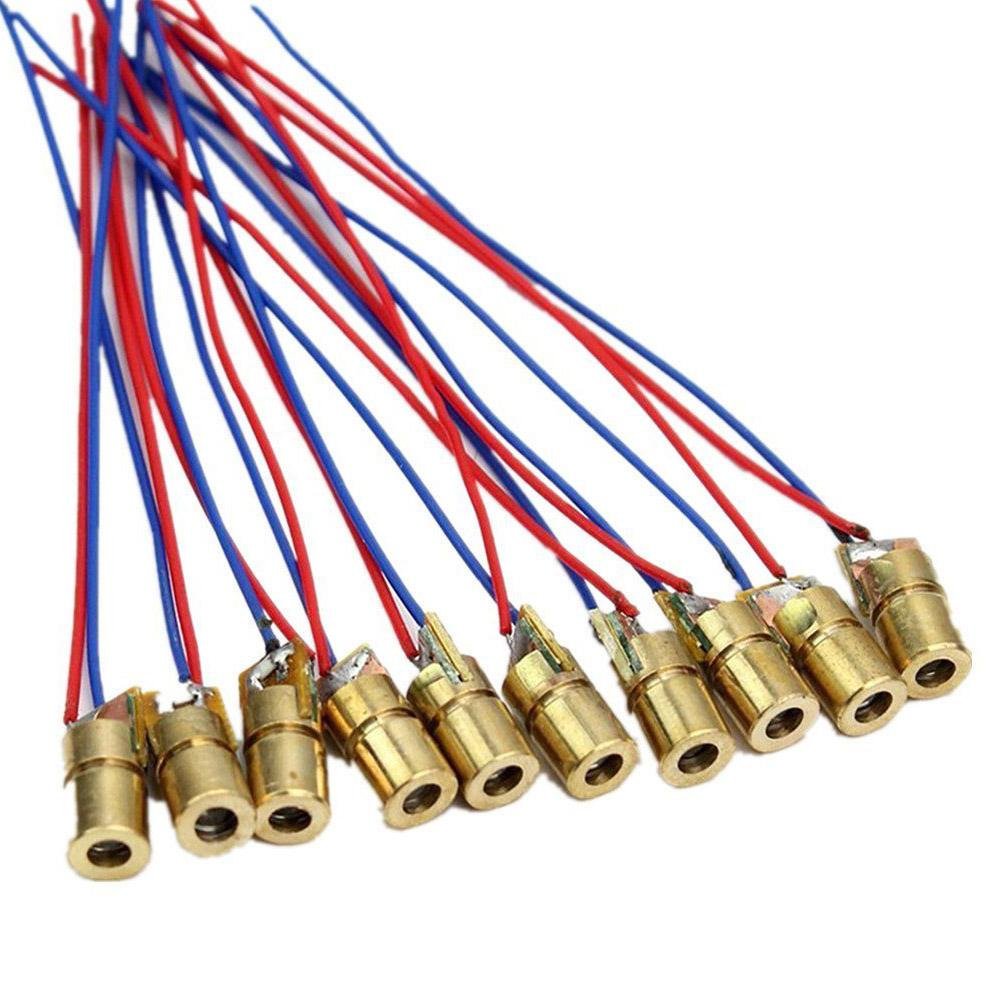
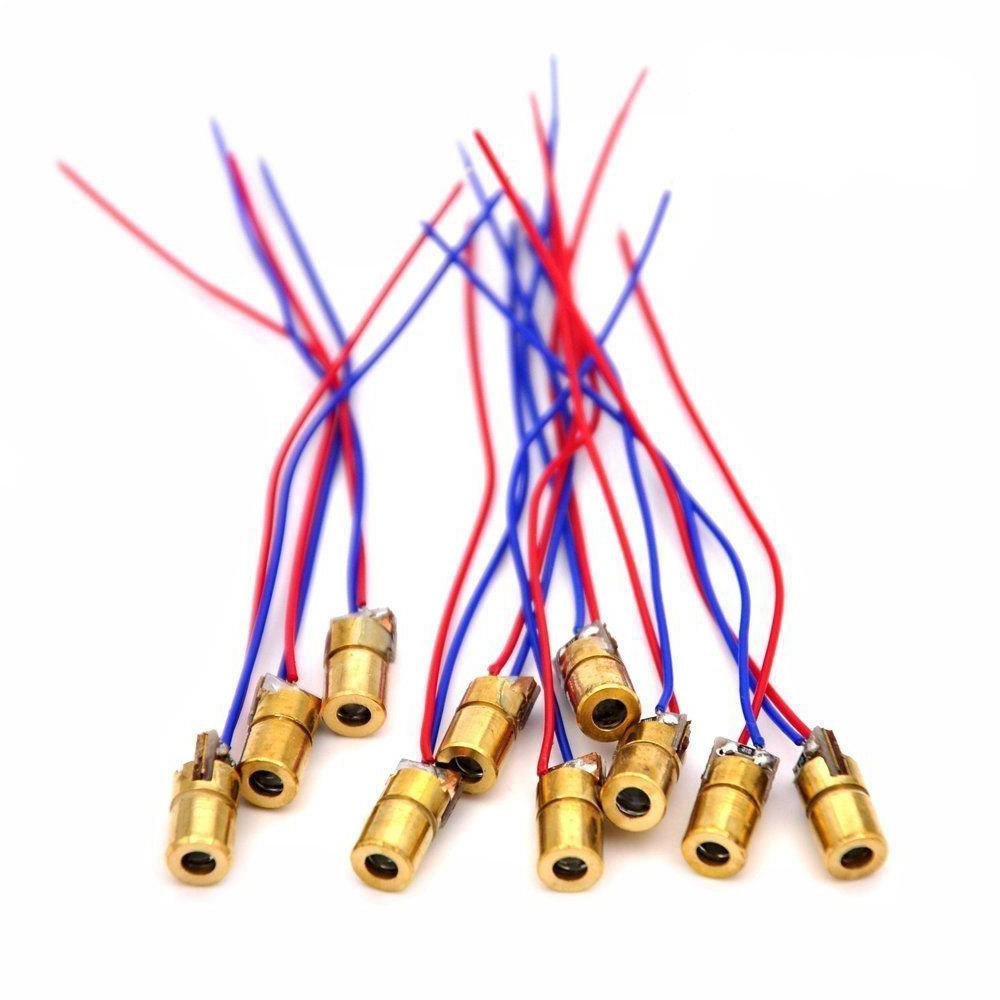
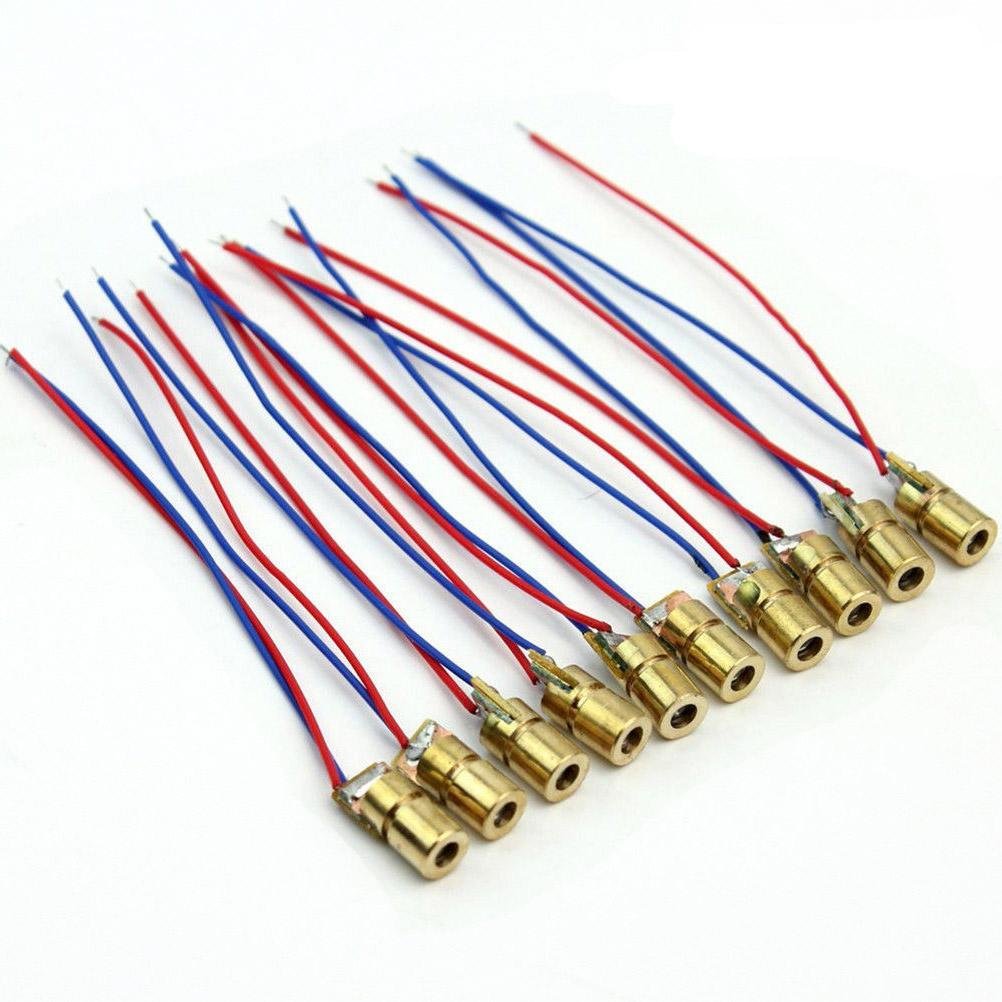
A focused red laser dot from a module barely bigger than a grain of rice — the 650nm 5mW Red Laser Diode Module produces a tight, visible red dot at distances of 15+ meters from a compact 6mm brass housing. It comes pre-wired with color-coded leads and includes a built-in 91Ω current-limiting resistor, so there's nothing extra to add — just connect 5V and ground, and you have a laser. The focusable acrylic lens lets you adjust the dot size by rotating the threaded lens holder.
Drawing less than 40mA, it can be powered directly from an Arduino digital pin for programmable on/off control, blinking patterns, or sensor-triggered activation. Sold in multi-packs because you'll always want more than one.
⚡ Key Features
- Ready to use: Built-in 91Ω current-limiting resistor — no external resistor or driver circuit needed. Just connect 5V and ground.
- Pre-wired: ~75mm (3") color-coded leads already soldered — red (+) and blue/black (−). No soldering required.
- Focusable lens: Adjustable acrylic lens — rotate the threaded brass lens holder to adjust dot size and focus.
- Compact brass housing: Just 6mm diameter × 13.5mm long — fits in tight spaces, mounts with a 6mm clip or heat-shrink tubing.
- Low power draw: Less than 40mA at 5V — safe to drive directly from an Arduino digital or PWM pin.
- Wide operating range: Begins lasing at ~3V, rated for 5V maximum. Works with 3.3V systems at reduced brightness.
- Multi-pack value: Available in 5-pack and 10-pack quantities.
🔧 How to Use
- Connect power: Red wire to 5V positive, blue/black wire to ground. The laser turns on immediately.
- Focus the beam: Aim at a surface 1–3 meters away and gently rotate the threaded lens holder until the dot is sharp and small.
-
Arduino control (optional): Connect the red wire to a digital pin (e.g., D7) and blue/black to GND. Use
digitalWrite()for on/off oranalogWrite()on a PWM pin for brightness control.
🎯 Perfect For
- Laser tripwire / security beam — pair with a photoresistor (LDR) to detect when the beam is broken
- Laser target practice game — combine with LDR sensors on targets to detect hits and keep score
- Alignment & positioning tool — visual reference for leveling, centering, or CNC/3D printer alignment
- Pet toy — mount on a servo for automated dot movement (always supervise, avoid eye exposure)
- Robotics — visual indicator of where a robot is pointing or aiming
- Optics experiments — demonstrate reflection, refraction, and diffraction with mirrors and prisms
- Light shows & art — create patterns using mirrors, motors, and multiple modules
- Arduino & STEM projects — teach digital output, PWM, and sensor integration
📐 Specifications
- Laser wavelength: 650nm (red)
- Optical power: ~5mW
- Laser class: Class IIIa / 3R
- Spot mode: Dot, continuous output
- Supply voltage: 5V DC max (begins lasing at ~3V)
- Operating current: <40mA
- Current limiting: Built-in 91Ω resistor
- Wire colors: Red = positive (+), Blue/Black = negative (−)
- Wire length: ~75mm (3")
- Housing: Brass, 6mm diameter × 13.5mm length
- Lens: Acrylic, focusable (threaded)
- Operating temperature: −36°C to +65°C
- Weight per module: ~1.4g
🔌 Compatible With
- Arduino Uno, Mega, Nano, Leonardo — connect directly to digital or PWM pin (<40mA)
- ESP32 / ESP8266 — works at 3.3V (reduced brightness) or use transistor to switch 5V
- Raspberry Pi — use transistor/MOSFET to switch 5V (do not connect directly to GPIO)
- Any 5V DC source — USB power banks, USB chargers, 3×AA batteries (4.5V), regulated supplies
📦 Package Contents
- 5 or 10 × 650nm 5mW Red Laser Diode Modules, pre-wired (select quantity above)
Power supply, Arduino, breadboard, and additional wiring are not included.
📄 Documentation & Resources
Share