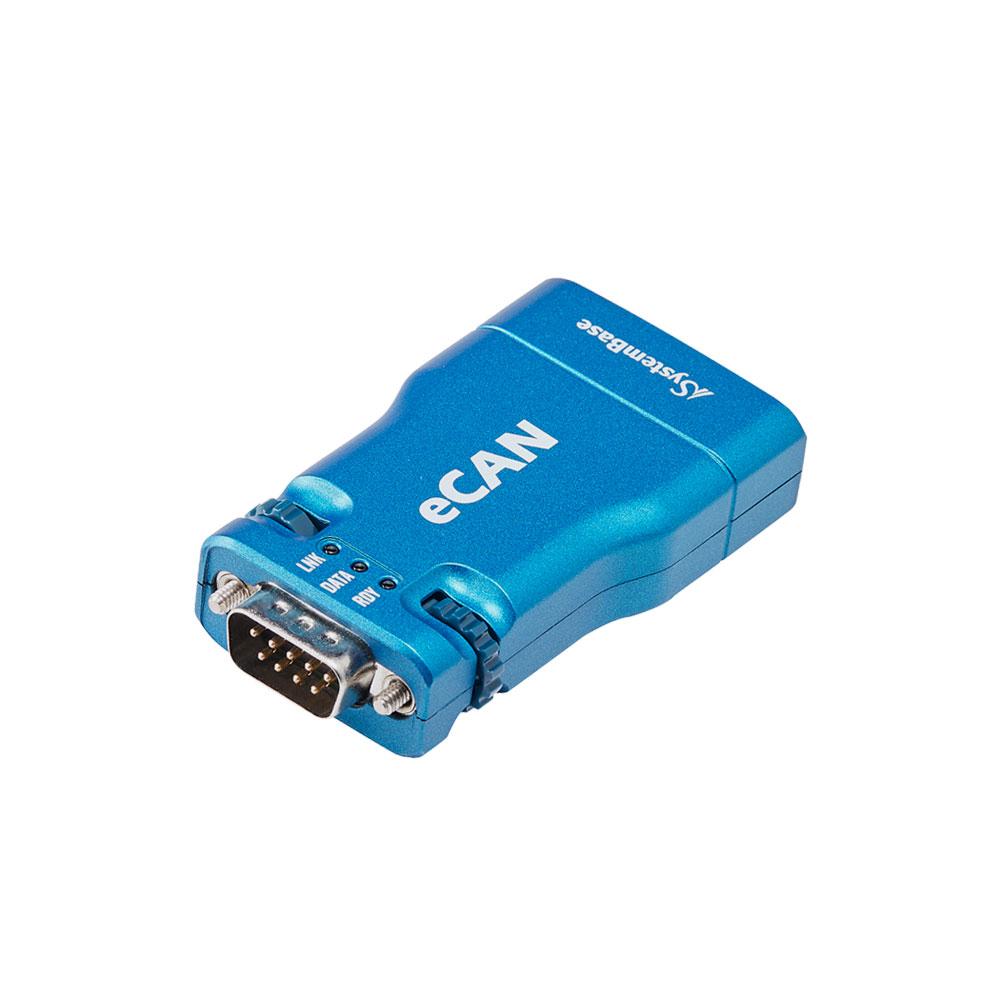


SystemBase eCAN Ethernet to CAN Converter — CAN 2.0A/B, 1Mbps, LAN/RJ-45
SystemBase eCAN Ethernet to CAN Converter — CAN 2.0A/B, 1Mbps, LAN/RJ-45
Couldn't load pickup availability
📋 Overview
The SystemBase eCAN is an industrial Ethernet to CAN Bus gateway that lets you access, monitor, and control CAN equipment over a standard TCP/IP network instead of running dedicated point-to-point serial cables to every device. It converts CAN Bus traffic to Ethernet (and back) so PCs, servers, and other equipment anywhere on your LAN — or across the internet — can talk to CAN devices as if they were directly connected.
eCAN supports COM Port Redirection (VCP), which lets Windows software that expects a serial port use the network-connected eCAN as if it were a local COM port — no code changes required. For developers, TCP and UDP socket access is also available directly, with sample source code provided. Configuration, monitoring, and firmware management are handled through a built-in Web interface or the free eCANConfig utility, and the included eCANView software lets you send, receive, filter, and analyze CAN frames from a PC.
🎯 Applications — What Problems Does eCAN Solve?
Serial-to-CAN adapters work great for a single PC sitting next to a single CAN device. But once you need to reach that CAN equipment from another room, another building, or another PC on the network, a direct cable stops being practical. eCAN removes that limitation by putting the CAN bus on your Ethernet network.
- Remote monitoring and diagnostics: Access and monitor CAN equipment from any PC on the network — or remotely over the internet — instead of being tied to a cable running to a single workstation.
- Bridging separate CAN bus segments: Connect two physically separate CAN networks (different rooms, floors, or even different sites) together over Ethernet/LAN/WAN by setting one eCAN as a TCP/UDP server and the other as a client.
- Centralizing test benches and dynos: Let multiple engineering workstations on the same network view live CAN traffic from a test bench or vehicle dyno, without wiring a dedicated serial or CAN line to every desk.
- Drop-in replacement for legacy serial software: COM Port Redirection (VCP) makes eCAN appear as a standard Windows COM port, so existing serial-based monitoring or logging software can keep working unmodified while gaining network access to the CAN bus.
- Centralized, remote configuration: Manage network settings, CAN baud rate, and ID/mask filtering from the built-in Web interface or eCANConfig utility — useful for equipment installed in cabinets, machine rooms, or other hard-to-reach locations.
- Reducing CAN network load on busy buses: Configurable Acceptance Filtering (ID + Mask) at the hardware level limits which CAN frames are even forwarded to the network, cutting bandwidth and processing load for high-traffic networks.
⭐ Key Features
- Converts CAN Bus (2.0A/2.0B) traffic to Ethernet TCP/UDP and back, transparently
- COM Port Redirection (VCP) — appears as a standard Windows COM port to existing serial software
- Supports COM Redirector, TCP Server/Client, and UDP Server/Client operation modes
- Built-in Web configuration interface plus the free eCANConfig Windows utility
- eCANView software for sending, receiving, filtering, sorting, and analyzing CAN frames with error counters (TEC/REC/LEC)
- Hardware Acceptance Filtering (ID + Mask) to reduce network and processing load
- Automatic serial/network baud rate detection support
- CAN VBUS power option — power the unit from pin 9 of the CAN port instead of the DC adapter
- ±15kV ESD protection and a -40°C to 85°C operating range for industrial environments
- Sample source code and DLL included for custom TCP/UDP socket programming
📊 Specifications
| Product Type | Industrial Ethernet (LAN) to CAN Bus Converter |
| Ethernet Interface | 10/100Mbps, RJ-45 (MDI/MDIX), 1 port |
| Network Connection | Static IP or Dynamic IP (DHCP) |
| Protocols | TCP, UDP, ICMP, DHCP, HTTP |
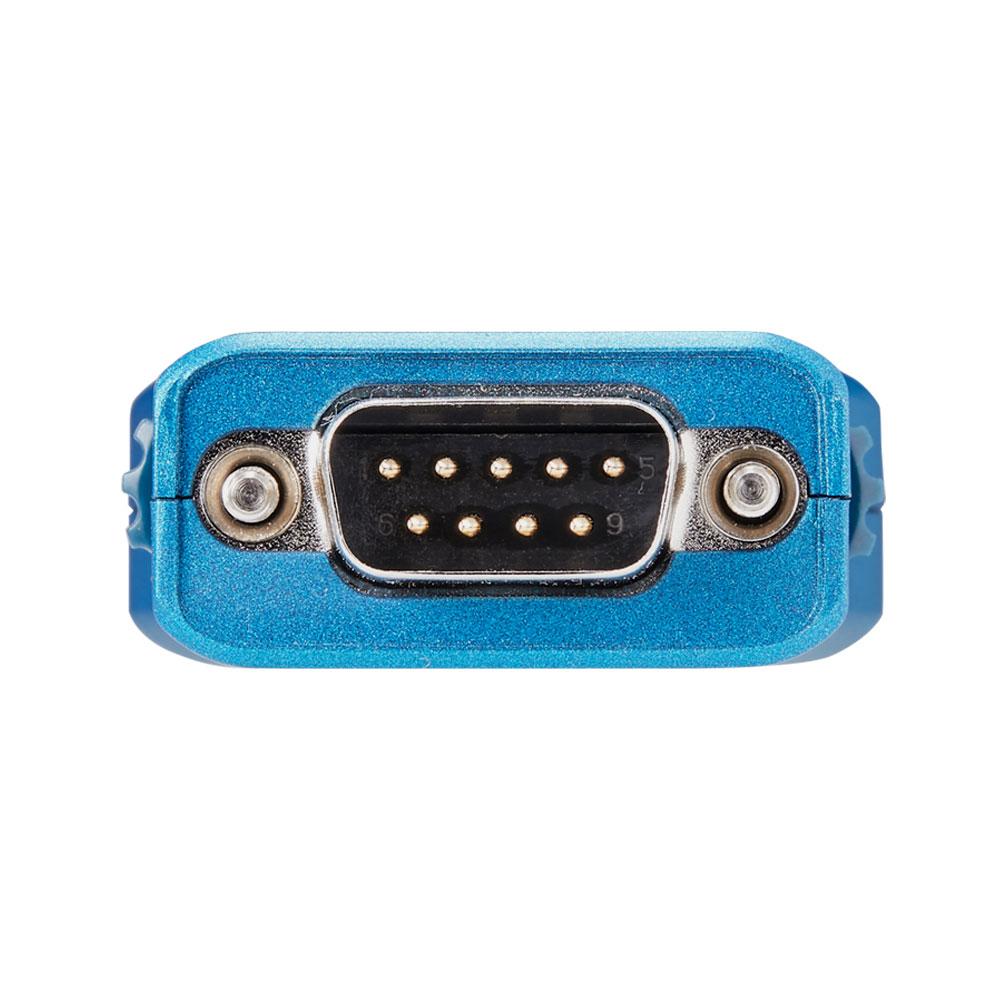
| CAN Interface | DB9 Male, 1 port |
| CAN Max Speed | 1Mbps |
| CAN Standard | CAN 2.0A / 2.0B |
| CAN Signals | CAN_H, CAN_L, VDD (pin 9), GND |
| ESD Protection | ±15kV |
| Power Requirement | 5V 1A DC input (power consumption approx. 0.95W); CAN VBUS (pin 9) also supported |
| Power Connector | Outer Ø3.5mm, Internal Ø1.35mm barrel jack |
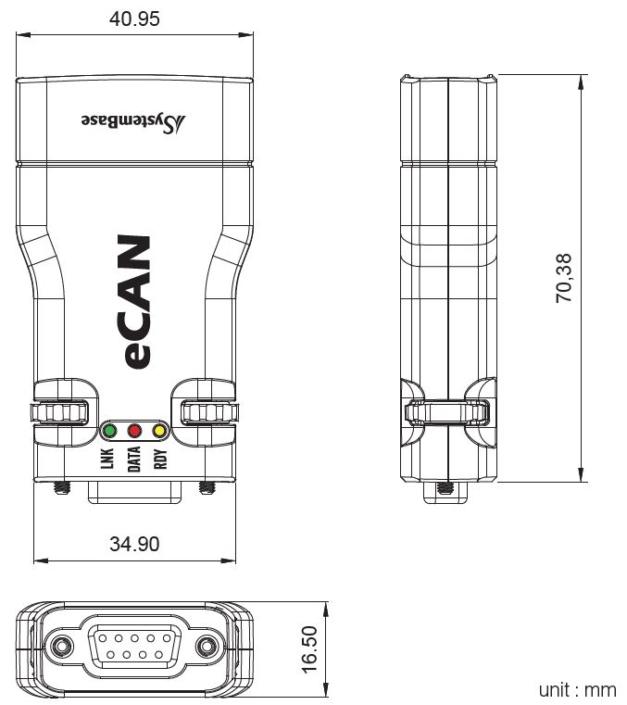
| Dimensions | Approx. 40.9 × 74.5 × 16.5 mm (1.61 × 2.93 × 0.65 inches) W × L × H |
| Weight | 32.1 g (1.13 oz) |
| Configuration Tools | Web interface, eCANConfig utility |
| Utility Software | COM Redirector (VCP), eCANView |
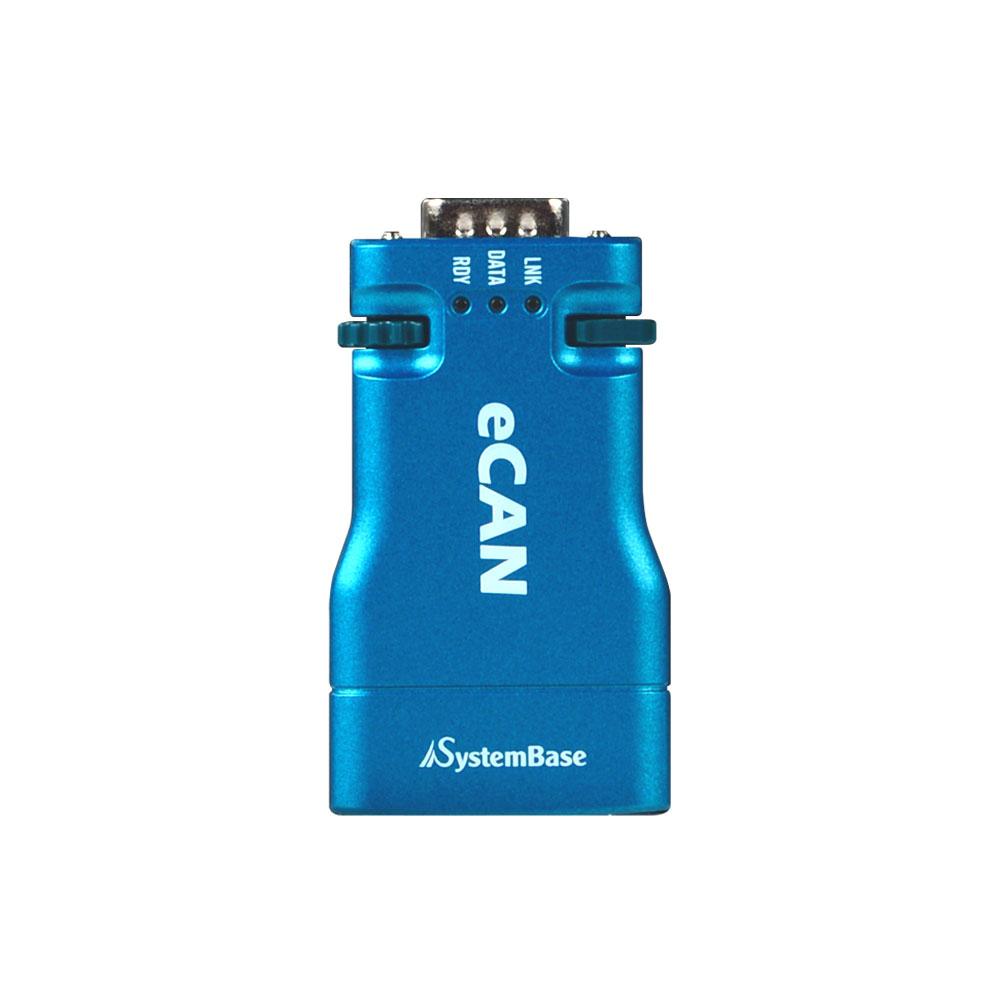
| LED Indicators | RDY (Yellow), DATA (Red), LNK (Green) |
| Operating Temperature | -40°C to 85°C (-40°F to 185°F) |
| Storage Temperature | -40°C to 85°C |
| Humidity | Max. 95% R.H., non-condensing |
📦 What's in the Box
- 1× SystemBase eCAN Ethernet to CAN Converter
- 1× Ejector Pin (for reset button access)
- 1× 5V DC Power Adapter
- 1× LAN Cable
- Warranty Policy & Download Guide
📌 Pinout / Pin Diagram
Ethernet Side: Standard RJ-45 port (10/100Mbps, MDI/MDIX auto-sensing)
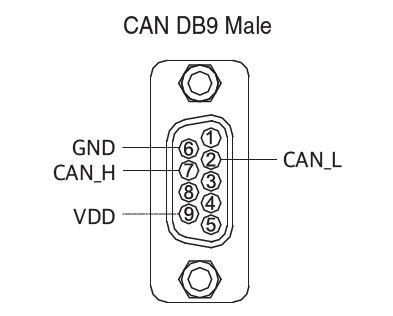
CAN Side (DB9 Male):
- Pin 2: CAN_L
- Pin 6: GND
- Pin 7: CAN_H
- Pin 9: VDD / VCC (5VDC power)
🔧 Setup / Configuration
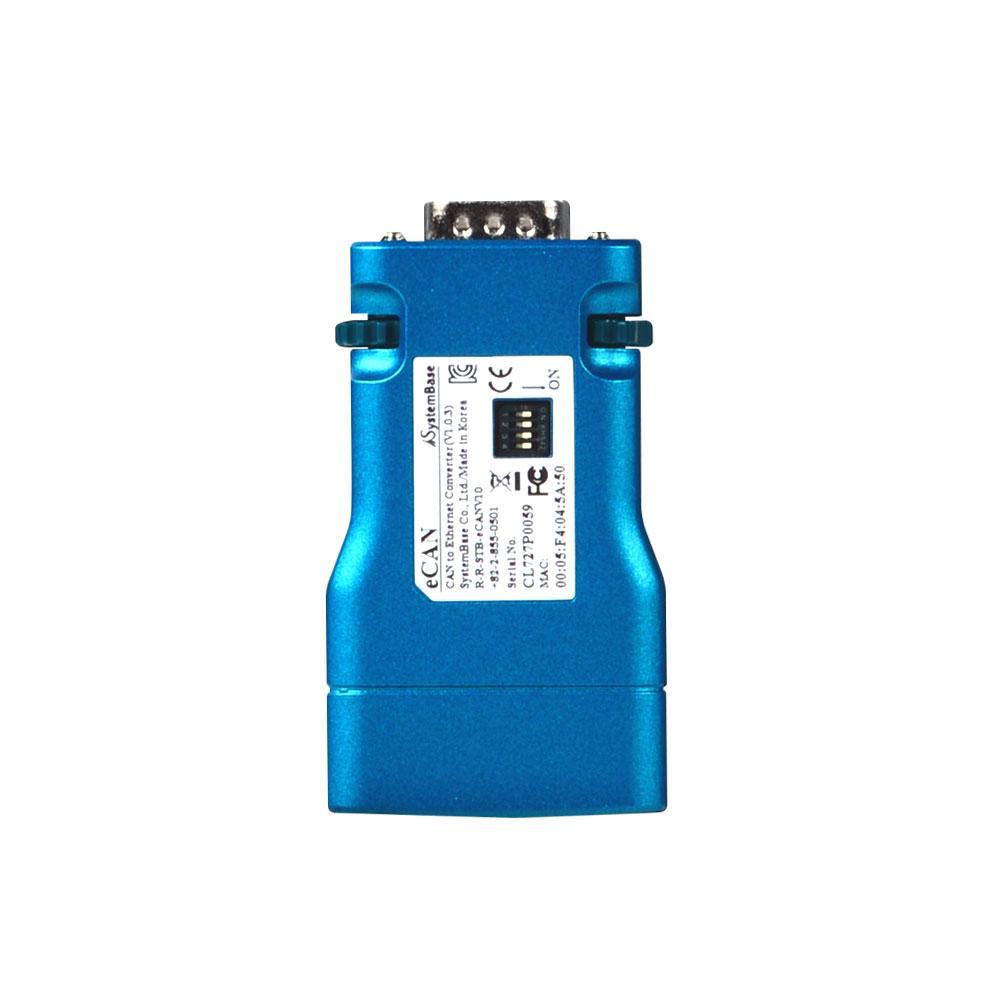
eCAN is configured through its built-in Web page or the free eCANConfig Windows utility — no DIP switches are needed for basic network or CAN settings. The 4-position DIP switch on the underside of the unit is used only for CAN bus termination:
- Switches 1 and 4: Not used
- Switches 2 and 3 (must be set together): ON = enable 120Ω termination resistance / OFF = disable termination resistance
The RST button on the back of the unit resets or restores the device: press for less than 3 seconds for a normal reboot, or hold for more than 3 seconds to restore factory default settings (including the default Web login).
To configure over the Web, connect a PC to the same network as the eCAN, browse to its IP address (default 192.168.0.223), and log in with the default credentials (username ecan, password 99999999). From there you can set Network, CAN, and Filter options, then Submit and Reboot to apply changes.
Note: Web-based configuration requires a 100Mbps or faster network connection between your PC and the eCAN (directly or through a switch). Networks slower than 100Mbps are not supported for Web configuration — use the eCANConfig utility instead in that case.
💻 Software
eCAN has three software tools available for download from the SystemBase website: the COM Redirector, which creates a virtual COM port (VCP) so Windows applications can use the network-connected eCAN as if it were a local serial port; eCANConfig, a Windows utility for searching, configuring, and upgrading firmware on eCAN devices on the network; and eCANView, a GUI analyzer/exerciser for sending test CAN frames and monitoring live traffic, complete with ID filtering, sorting, and TEC/REC/LEC error counters.
💡 Tips
- If eCAN is at the end of a CAN bus segment, enable the onboard 120Ω termination resistor by setting DIP switches 2 and 3 to ON together.
- Use Static IP rather than DHCP when running eCAN as a COM Redirector, TCP Server, or UDP Server, so its address doesn't change unexpectedly.
- If communication between two eCANs isn't working, double-check the CAN settings on both units first, then check bus termination before assuming a network issue.
- Save communication logs from eCANView (Log → Save) when you need to review or share CAN traffic captured during testing.
🚫 Limitations
- Only one CAN port and one Ethernet port per unit — this is a single-channel gateway, not a multi-port hub.
- Web-based configuration requires a 100Mbps+ network link; slower networks must use the eCANConfig utility.
- This device is intended for industrial use (Class A) and is not intended for residential use; it has the potential to cause or receive radio interference in a residential setting.
📄 Documentation & Resources
- Spec Sheet — Full technical specifications, dimensions, and pinout
- User Manual — Web setup, CAN configuration, eCANView, and troubleshooting
- Manufacturer Product Page — Specifications, app notes, downloads
- All CAN Bus Converters
Sold and supported by Envistia Mall. This product ships from the United States. Envistia Mall and the manufacturer are not liable for damages or losses resulting from improper installation, incorrect wiring, or use outside the specified operating conditions. Always verify network and CAN wiring, power source, and bus termination before connecting to live industrial or vehicle networks, and consult the User Manual for full setup and safety guidance.
Share