

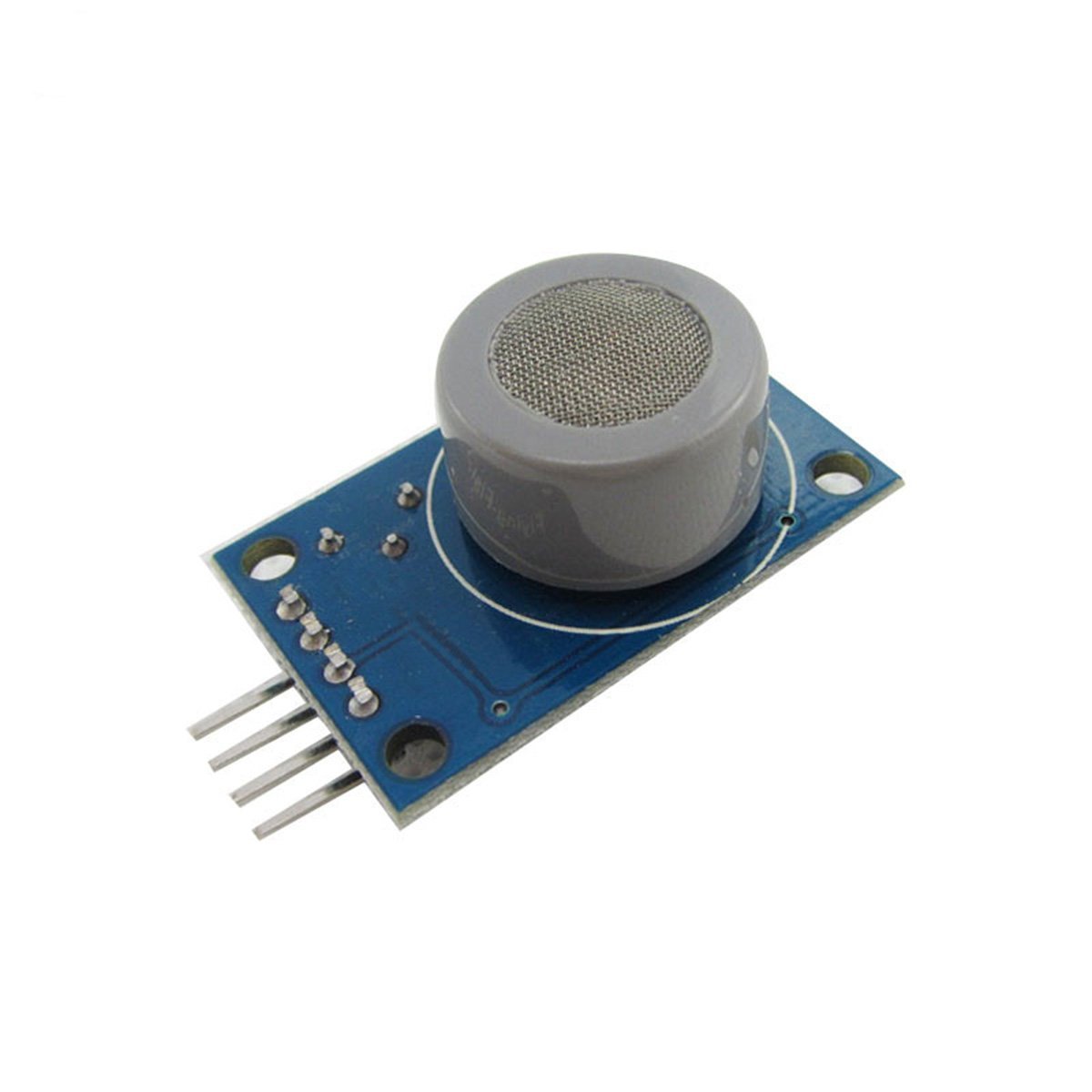
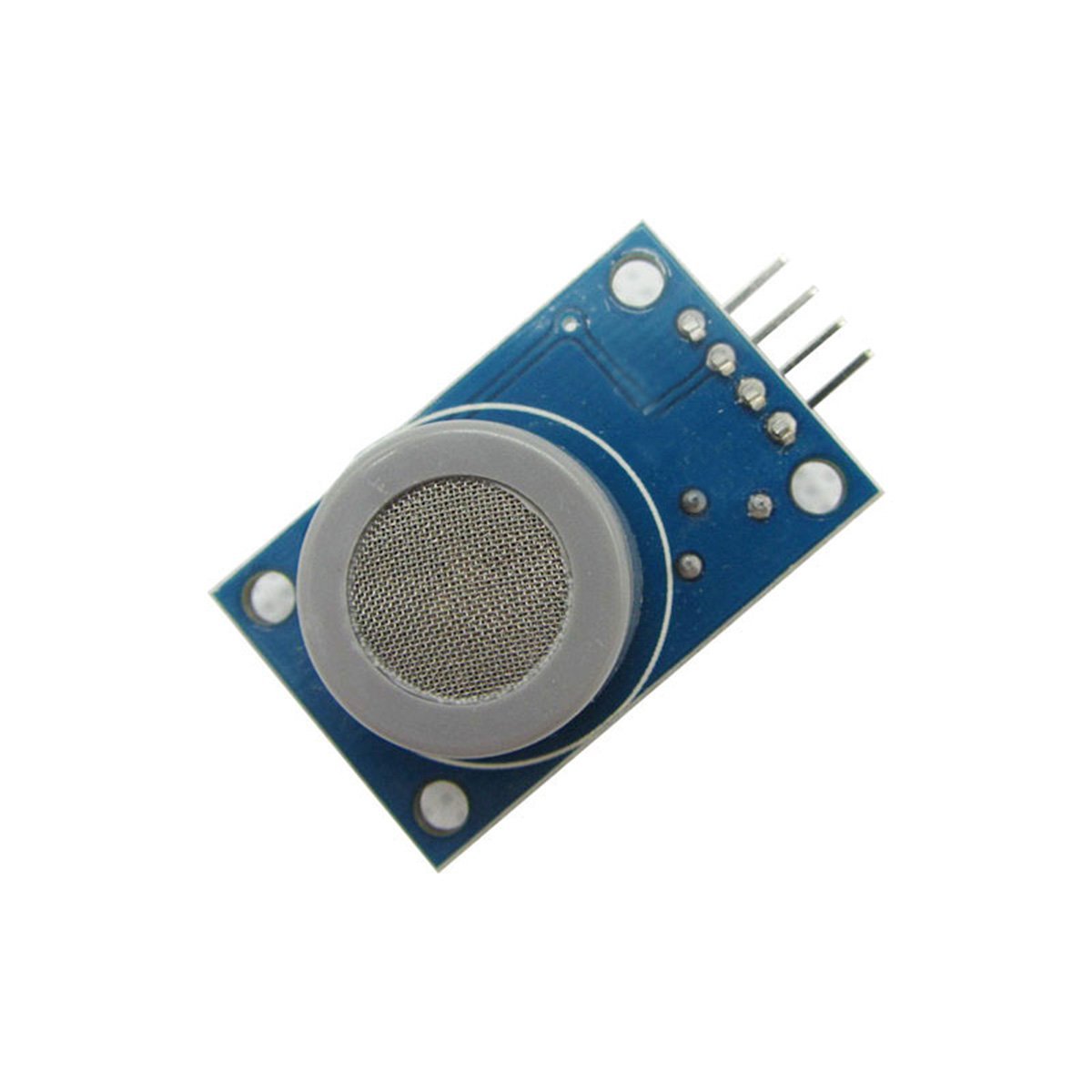
MQ-7 Carbon Monoxide CO Gas Sensor Detector Module
MQ-7 Carbon Monoxide CO Gas Sensor Detector Module
Couldn't load pickup availability
📋 Overview
The MQ-7 gas sensor detector module is a dedicated carbon monoxide (CO) sensor designed to detect CO concentrations in the air from 10 to 1,000 ppm. Carbon monoxide is an odorless, colorless, and potentially lethal gas produced by incomplete combustion — making reliable detection critically important in homes, garages, and industrial environments.
Unlike other MQ-series sensors that operate on a constant 5V supply, the MQ-7 uses a unique heating/measurement cycle — alternating between a 5V cleaning phase and a ~1.5V measurement phase — for the most accurate CO readings. The module will work on constant 5V for basic detection, but following the proper heating cycle yields significantly better accuracy. The module features dual signal outputs: an analog output (0V to ~5V) proportional to CO concentration and a digital TTL output with an adjustable threshold via the onboard potentiometer.
⭐ Key Features
- Dedicated CO Detection — Specifically designed for carbon monoxide gas detection (10–1,000 ppm)
- Heating/Measurement Cycle — Alternating 5V cleaning and ~1.5V measurement phases for high-accuracy readings
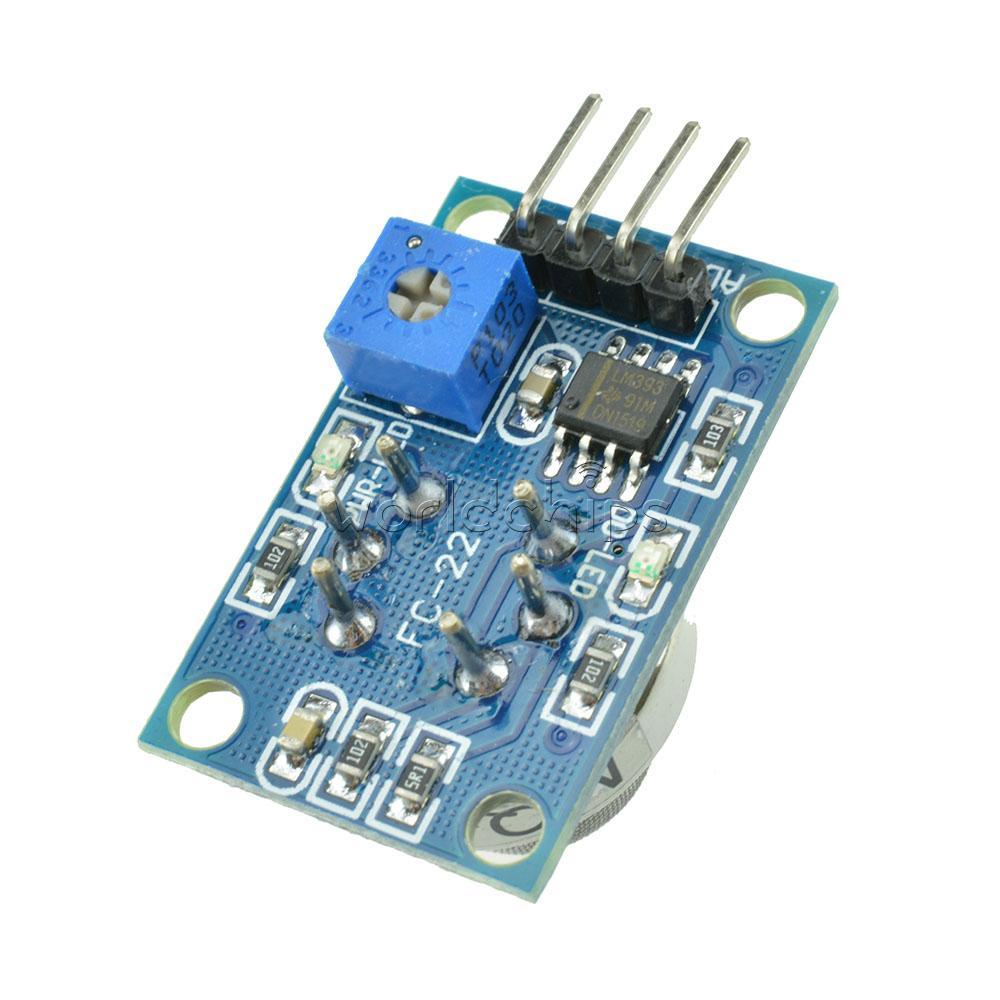
- Dual Signal Output — Analog (AO) and digital TTL (DO) outputs for flexible integration
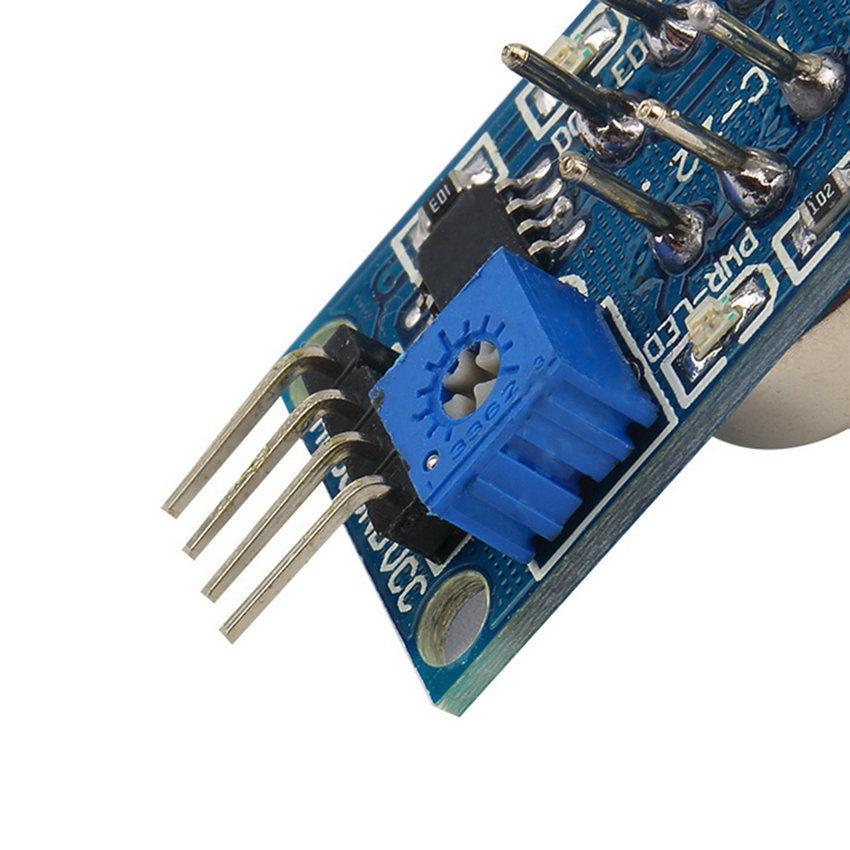
- Adjustable Threshold — Onboard potentiometer to set the digital output trigger level
- Indicator LEDs — Power LED and digital output (DO) status LED for visual feedback
- Fast Response & Recovery — Quick detection and return to baseline for reliable monitoring
- Simple 4-Pin Interface — VCC, GND, AO, DO — no library required
- 5V Compatible — Works directly with Arduino, ESP8266, and other 5V development boards
📊 Specifications
| Parameter | Value |
|---|---|
| Operating Voltage | 5V DC (cleaning/reading); ~1.5V (measurement phase via PWM) |
| Maximum Power Consumption | 800 mW (160 mA at 5V) |
| Detectable Gas | Carbon monoxide (CO) |
| CO Detection Range | 10–1,000 ppm |
| Analog Output (AO) | 0V to ~5V (proportional to CO concentration) |
| Digital Output (DO) | TTL level — LOW normally, HIGH when CO detected |
| Threshold Adjustment | Onboard potentiometer |
| Preheat / Burn-In Time | 48 hours (initial, at 1.5V); ~2–5 minutes for subsequent power-ons |
| Indicator LEDs | Power LED, DO (Digital Output) LED |
| Dimensions | Approx. 32 × 20 × 27 mm (1.25 x 0.8 x 1.1 inches) L × W × H |
| Weight | ~7 grams |
📦 What's in the Box
- 1x MQ-7 Carbon Monoxide (CO) Gas Sensor Detector Module
🔌 Compatible With
- Arduino (Uno, Mega, Nano, Pro Mini, and compatibles)
- ESP8266 and ESP32 development boards
- Raspberry Pi (with ADC module for analog reading)
- STM32, Teensy, and other 5V-compatible microcontrollers
- Any microcontroller with analog input, PWM output, and 5V power supply
🚀 Getting Started
- Connect VCC to 5V, GND to GND, AO to an analog input pin (e.g., A0), and DO to a digital input pin (e.g., D2)
- Upload a basic analogRead() sketch to your Arduino — no special library is required
- Open the Serial Monitor at 9600 baud and allow the sensor 2–5 minutes to warm up
- Observe the baseline reading in clean air — the value should be relatively low and stable
- Adjust the onboard potentiometer to set the digital output threshold for your application
💡 Tip: The MQ-7 works on constant 5V for basic CO detection, but for the most accurate readings, use the heating/measurement cycle described in our User Guide (see link below) — alternating 60 seconds at 5V (cleaning) and 90 seconds at ~1.5V via PWM (measurement). See the User Guide tab for full details and Arduino code.
📌 Pinout
| Pin | Function |
|---|---|
| VCC | Power supply input — connect to +5V (or PWM-controlled ~1.5V for measurement phase) |
| GND | Ground |
| DO | Digital output — TTL HIGH when CO exceeds threshold |
| AO | Analog output — voltage proportional to CO concentration (0–5V) |
🎯 Typical Applications
- Carbon monoxide leak detection (furnace rooms, garages, kitchens)
- Industrial CO monitoring systems
- Arduino and microcontroller safety projects
- Portable CO sniffers and handheld detectors
- Smart home automation — trigger ventilation fans, alarms, or shut-off valves when CO is detected
- Air quality monitoring stations
- Combustion efficiency monitoring
- Educational and STEM projects demonstrating analog sensor interfacing and PWM control
⚠️ Important Notes
- The sensor element gets hot during operation — do not touch the metal mesh cylinder while powered
- Carbon monoxide is a deadly gas — this module is for detection and indication only, not a certified safety device. Always use UL/CSA-listed CO detectors for life safety
- The MQ-7 datasheet recommends a 48-hour initial burn-in at 1.5V the first time you use the sensor for best accuracy
- The MQ-7 has some cross-sensitivity to other reducing gases (such as hydrogen). For applications requiring high specificity, consider an electrochemical CO sensor
- Raw analog readings are not direct PPM values — calibration against known concentrations is required for PPM conversion
- The sensor draws up to 160 mA — use an external 5V supply if powering multiple sensors or experiencing unstable readings
- Do not test the sensor by exposing it to vehicle exhaust or other combustion sources in enclosed spaces
📄 Documentation & Resources
- User Guide — Wiring, Heating Cycle, Arduino Code & Troubleshooting
- All Sensor, Detector & Input Module Guides
Share

