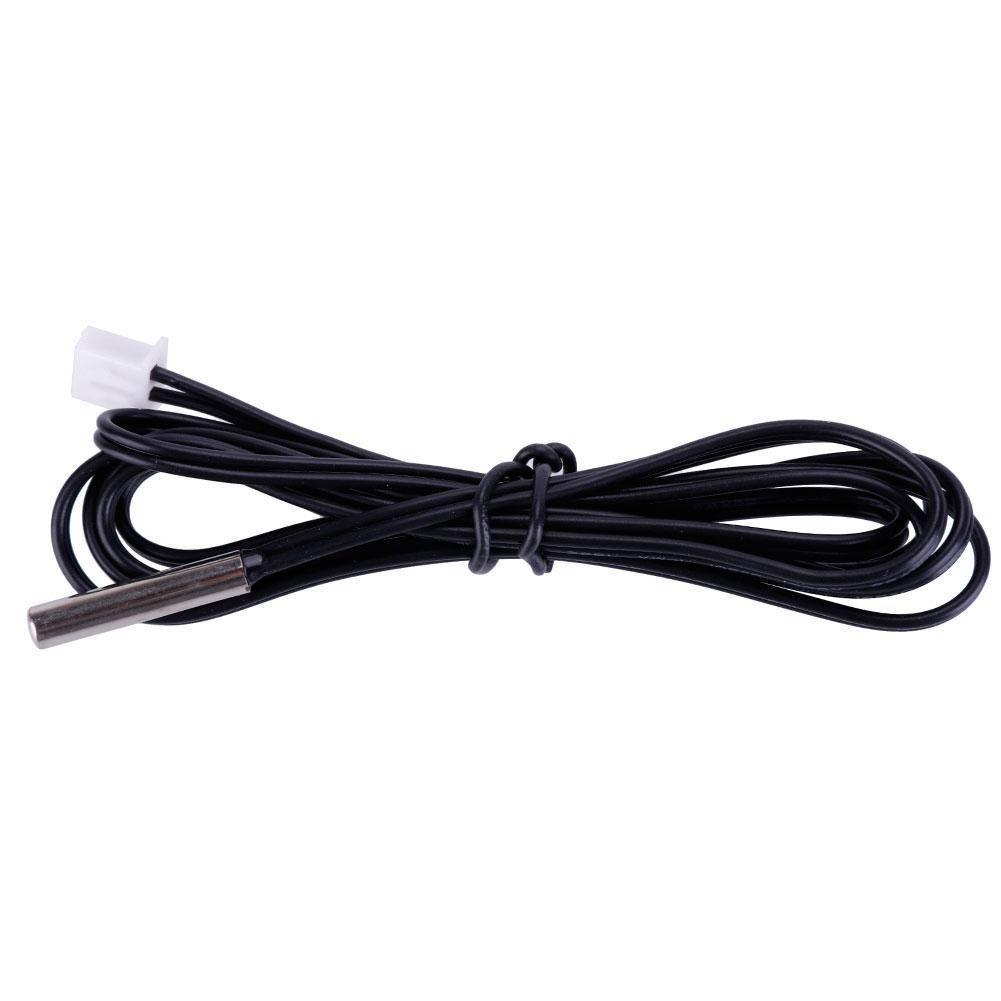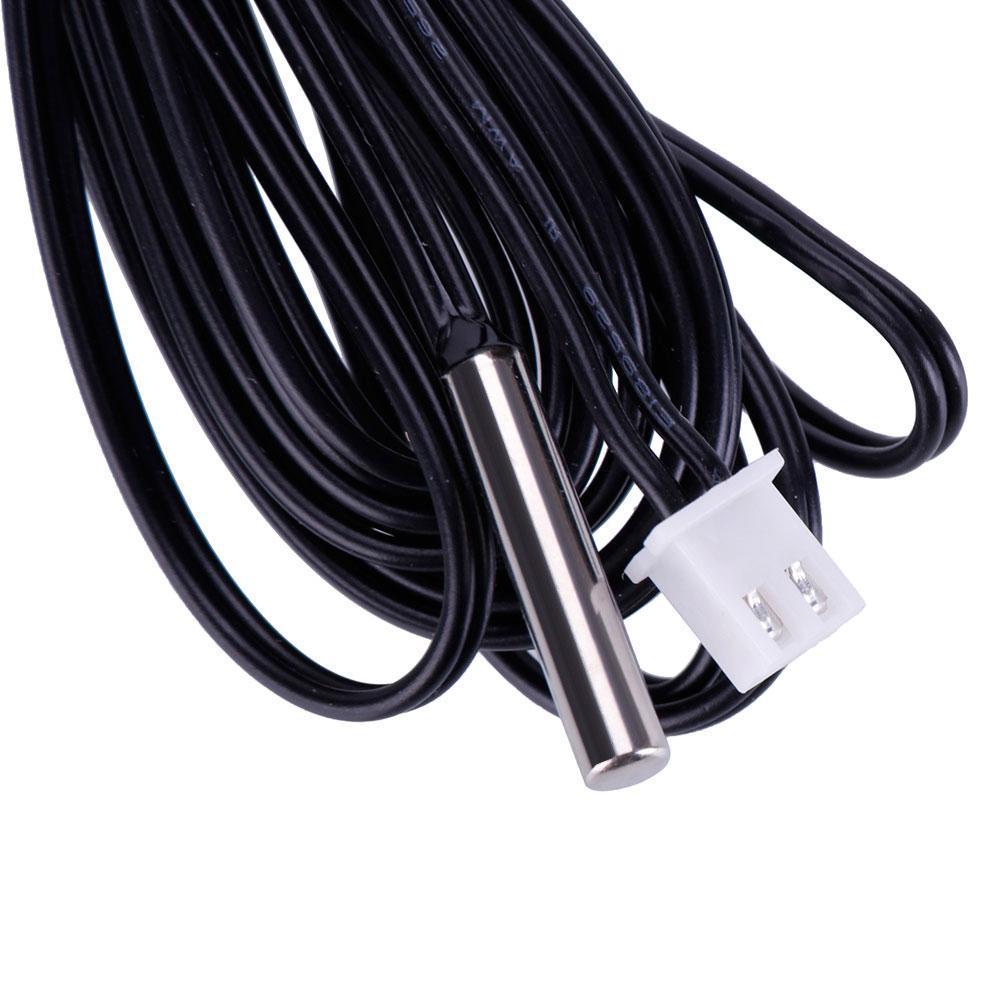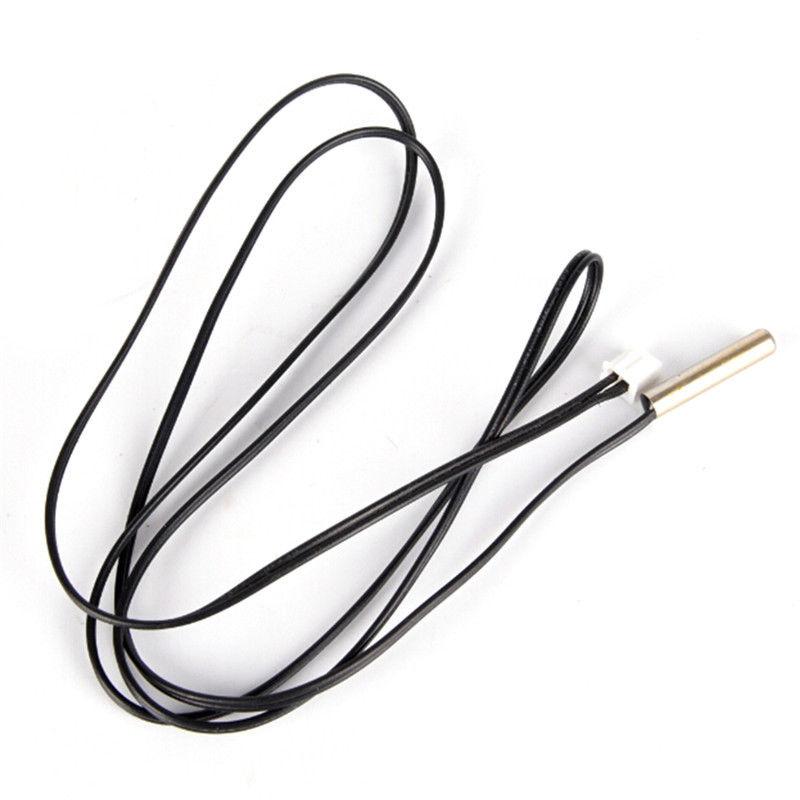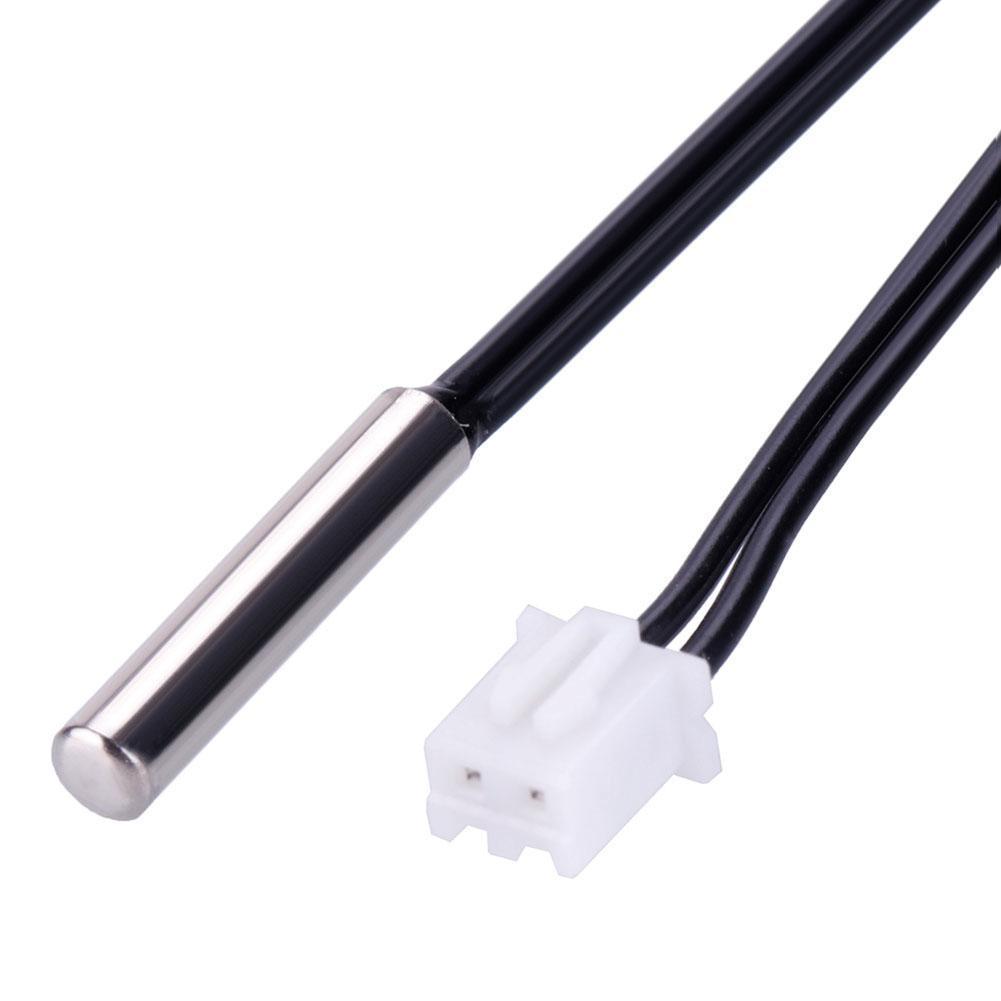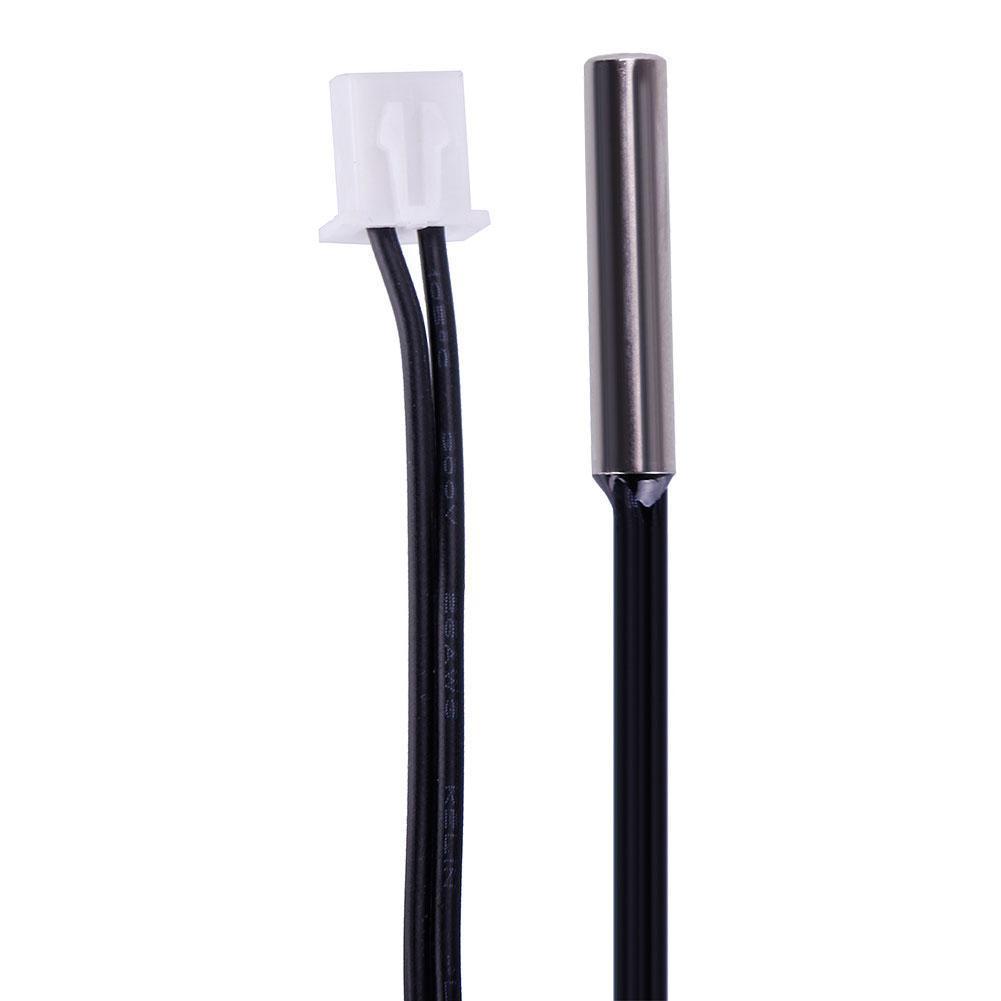


NTC Thermistor Temperature Sensor Probe 10K 1% 3950 Waterproof 1M Length
NTC Thermistor Temperature Sensor Probe 10K 1% 3950 Waterproof 1M Length
Couldn't load pickup availability
An NTC (Negative Temperature Coefficient) thermistor is a temperature sensor that uses the resistance properties of ceramic/metal composites to measure the temperature.
This probe can be used with our W1209 Temperature Controller, for applications that require a longer probe, or for a spare.
In addition, it can be used with an Arduino or other microcontrollers for measuring the temperature of air, gases or liquids.
Specifications
- Stainless steel sheath and waterproof
- Measurement range: -4°F to +200°F (-20°C to 105°C)
- Length of wire: 1 meter
- Size of probe: 5mm x 25 mm
- Output: 2 wires with 2-socket connector
- Type: NTC 10k ±1% 3950
- B-constant : 3380K +/- 1%
- Typical Dissipation Constant: 5mW / °C
- Probe insulation: >100 MOhm
- Stress sustain: 9.8N (1kgF) for 1 minute no deformation
Package Includes
1x (1 Piece) NTC Thermistor Temperature Sensor 10K 1% 3950 with Waterproof Probe - 1 Meter Length
Frequently Asked Questions (FAQ)
Compatibility & Applications
Q: How do I know if this thermistor will work with my water cooler or appliance?
A: Check your device's specifications for these key requirements:
- Resistance value: Must require a 10K Ohm (10KΩ) thermistor
- B-value: Should specify B=3950 or be compatible with 3950K coefficient
- Accuracy: This sensor offers ±1% tolerance, suitable for most temperature control applications
- Probe length: 1 meter cable length must be sufficient for your installation
Most water coolers, refrigeration units, and HVAC systems that use NTC thermistors will specify these values in their technical documentation or replacement parts list.
Q: What temperature range can this thermistor measure?
A: This thermistor is specified to operate reliably in the range of -4°F to +200°F (-20°C to 105°C). This makes it suitable for:
- Water coolers and dispensers
- Refrigeration systems
- Aquarium temperature monitoring
- HVAC applications
- Brewing and fermentation control
- General temperature sensing projects
Q: Can I use this with the W1209 Temperature Controller?
A: Yes! This thermistor is specifically designed to work with the W1209 and similar temperature controllers that require 10K NTC sensors. It's an ideal replacement or extension probe for projects requiring longer reach than standard probes.
Technical Specifications
Q: What does "10K 1% 3950" mean?
A: These are the critical specifications:
- 10K: Resistance of 10,000 Ohms at 25°C (77°F)
- 1%: Accuracy tolerance of ±1% (high precision)
- 3950: B-value (thermistor constant) of 3950K, which determines the resistance-temperature curve
Q: What is an NTC thermistor and how does it work?
A: NTC stands for "Negative Temperature Coefficient," meaning the resistance decreases as temperature increases. Your controller reads this changing resistance and converts it to a temperature reading. This makes NTC thermistors ideal for precise temperature monitoring and control.
Installation & Physical Properties
Q: Is this thermistor waterproof? Can I submerge it?
A: Yes, the probe is waterproof and can be fully submerged in water or other liquids. This makes it perfect for:
- Water cooler tanks
- Aquariums and fish tanks
- Liquid fermentation vessels
- Hydroponic systems
- Any application requiring direct liquid contact
Q: Can I extend the cable length if it isn't long enough?
A: While technically possible, extending thermistor cables can affect accuracy due to added resistance. For best results:
- Keep extensions minimal (under 3 meters total)
- Use shielded cable to reduce interference
- Consider purchasing a longer probe if available
- Recalibrate your system after any extension
Compatibility Verification
Q: My device's thermistor failed. How do I verify this is the correct replacement?
A: Follow these steps:
- Check the original part number or specifications in your device's manual
-
Measure the old thermistor with a multimeter at room temperature (~25°C):
- Should read approximately 10K Ohms if it's the same type
- Verify the connector type matches (or be prepared to splice wires)
- Confirm the probe dimensions will fit your installation location
Q: What if my device specifies a different B-value (like 3435 or 3380)?
A: The B-value must match closely for accurate readings:
- 3950 B-value (this thermistor): Most common for modern controllers
- If your device specifies 3435, 3380, or another value, this may not provide accurate readings
- Using the wrong B-value can result in temperature errors of 5-10°C or more
- Always match the B-value to your controller's specifications
Wiring & Connection
Q: How do I connect this thermistor?
A: NTC thermistors are non-polarized (no positive/negative):
- Simply connect the two wires to your controller's thermistor input terminals
- Wire color doesn't indicate polarity
- If your controller has a specific connector, you may need to splice or use appropriate terminals
- Ensure connections are secure and insulated if in wet environments
Q: Can I use this thermistor with Arduino, Raspberry Pi, or other microcontrollers?
A: Yes! You'll need to:
- Add a voltage divider circuit (typically with a 10K resistor)
- Read the analog voltage to calculate temperature
- Use the Steinhart-Hart equation with B=3950 for accurate conversion
- Many libraries and code examples are available online for 10K NTC thermistors
Troubleshooting
Q: My controller shows incorrect temperatures. What should I check?
A: Common issues and solutions:
- Verify B-value match: Controller must be set for B=3950
- Check connections: Loose wires cause erratic readings
- Inspect for damage: Probe housing cracks allow moisture in
- Test resistance: Should read ~10K Ohms at 25°C (77°F)
- Calibrate: Some controllers allow offset adjustment
Q: Can this thermistor be used in freezing applications?
A: Yes, NTC thermistors work well below freezing. However:
- Ensure the probe housing can withstand freeze/thaw cycles
- Ice formation won't damage the sensor itself
- Response time may slow slightly at extreme cold temperatures
Share